
A quorum is the minimum number of members who must be present at a meeting for any votes or decisions to be legally valid. The quorum definition applies to any decision-making body: corporate boards, legislatures, nonprofit committees, school boards, and HOA or condo association boards alike. The specific number or percentage required is typically set in the organization’s bylaws or governing documents.
This guide covers what quorum means in practice, how it’s calculated, what happens when you don’t have it, and how quorum requirements apply specifically to HOA and condo association board meetings and annual meetings.
Quorum Definition: How It Works
A quorum is the threshold that must be met before a group can take official action. Without it, any vote or resolution the group passes is generally invalid and subject to challenge.
Quorum exists to prevent a small minority from making decisions on behalf of the entire group. If two members of a seven-person board could meet privately and pass binding resolutions, the remaining five would have no voice in the decision. Quorum requirements protect against that by setting a minimum standard for representation.
The quorum requirement for your organization is found in its bylaws, governing documents, articles of incorporation, or the applicable state statute. It can be expressed as a majority, a fixed number, or a specific percentage. For HOA and condo associations, the bylaws are the governing authority on quorum. Some associations also formally adopt Robert’s Rules of Order as a parliamentary guide, which can provide a useful framework for running meetings, but it’s not required and doesn’t override what the bylaws say. Whatever your quorum threshold is, that number applies every time the group meets to take official action.
Quorum for HOA and Condo Board Meetings
For HOA and condo association board meetings, a quorum is usually a simple majority of the seated directors. That means more than half the board of directors must be present for the board to conduct official business.
Board meeting quorum and annual meeting quorum are calculated differently, and confusing them is one of the most common governance mistakes boards make.
Board meeting quorum is straightforward: count the seated directors and determine the majority. A five-member board needs three directors present. A seven-member board needs four. Check your association’s bylaws to confirm whether quorum is based on the number of seated directors or the total number of authorized board positions. This distinction matters when the board has vacancies.
Annual meeting quorum is a different calculation entirely. The annual meeting is a membership meeting, not a board meeting, and quorum is based on a percentage of the total homeowner membership. Governing documents typically set this between 10% and 25% of all owners, though the specific number varies by community and by state law. Annual meeting quorum is where associations run into the most trouble, because getting enough homeowners to attend in person or submit proxies (where state law allows them) is a persistent challenge for communities of every size.
Special meetings follow their own quorum rules. Some bylaws apply the same quorum threshold as the annual meeting; others set a different standard. In Maryland, for example, the Homeowners Association Act addresses annual meeting provisions and quorum, and boards should confirm that their governing documents align with current state requirements. Always check the bylaws for any meeting type before assuming the threshold.
Board meeting vs. annual meeting, at a glance
Board meeting: majority of seated directors. A 5-member board needs 3 present; a 7-member board needs 4. Annual (membership) meeting: a percentage of total homeowner membership, typically 10–25%, set by the bylaws. Different calculation, different remedy when it fails.
What Happens When You Don’t Have a Quorum
If quorum is not met, the meeting cannot conduct official business. Any votes taken without a quorum are generally invalid and can be legally challenged by members who were not present.
A lack of quorum doesn’t cancel the meeting, but it severely limits what the group can do.
Board meetings without quorum. The board cannot vote on motions, approve contracts, adopt resolutions, or take any binding action. Directors who are present can still discuss items on the agenda informally, but nothing decided in that discussion carries legal weight. The only motions typically permitted when quorum has not been met are to adjourn, recess, fix the time to adjourn, or take measures to obtain a quorum.
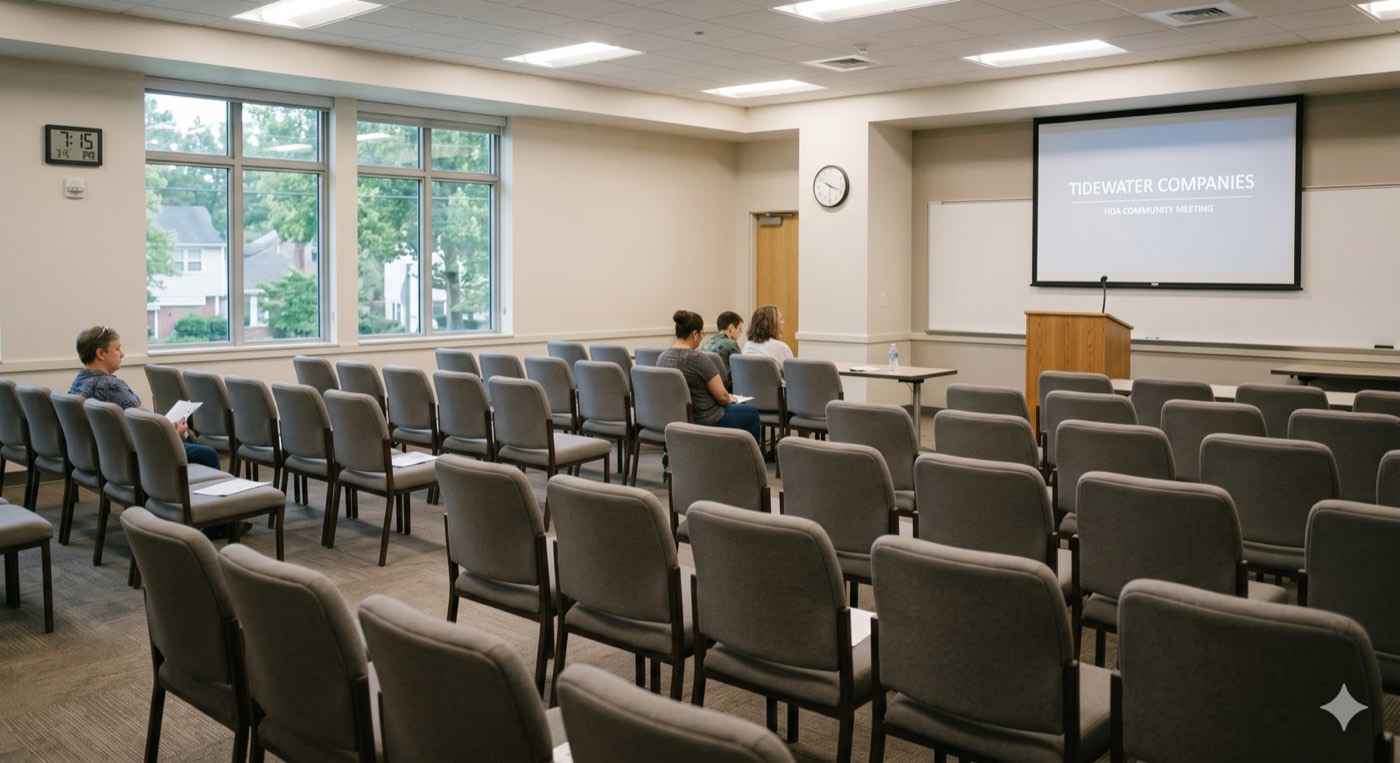
Annual meetings without quorum. This is where the real governance pain lives for HOA and condo boards. If the annual meeting doesn’t reach quorum, the association cannot elect new directors or vote on business items that require membership approval, such as bylaw amendments or special assessments. The most common remedy is to adjourn and reschedule the meeting. Many bylaws allow a reduced quorum at an adjourned meeting, which makes the rescheduled session easier to hold. Boards in states that allow proxy voting should actively solicit proxies before the rescheduled date to maximize participation.
The quorum trap
Some associations have governing documents that set unrealistically high quorum thresholds. When member engagement is low and the quorum bar is high, the community can become unable to conduct business at all: no elections, no bylaw amendments, no special assessments that require owner approval. Lowering the quorum threshold requires a bylaw amendment, which itself requires a quorum to pass. This circular problem is a real governance challenge — boards facing it should work with their association’s attorney and management company to identify a path forward.
Do Proxies Count Toward Quorum?
That depends on your state law and your governing documents. Many states, including Maryland and Virginia, allow proxy voting at membership meetings unless the association’s governing documents specifically prohibit it. In those states, proxies count toward quorum at annual meetings and special meetings. However, not every state allows proxy voting, and some that do impose specific requirements around how proxies must be executed, how long they remain valid, and whether they can be submitted electronically. Your state statute and governing documents are the final word.
Where proxy voting is permitted, it’s one of the most effective tools boards have for reaching quorum at annual meetings. A proxy allows a homeowner who cannot attend in person to designate another person to vote on their behalf. The proxy holder’s presence (or the submitted proxy form) counts toward the quorum calculation just as if the homeowner were in the room.
One important distinction: proxies apply to membership meetings, not to board of directors meetings. Directors are expected to be present, in person or by remote participation where the bylaws allow it. Because proxy rules vary significantly by state, boards should confirm their specific provisions with their governing documents and, if needed, their association’s attorney before relying on proxies to meet quorum.
Why Quorum Matters for Your Community
Quorum exists to protect the community. It ensures that decisions reflect the will of a representative group, not just the few people who happened to show up on a given evening.
Decisions made without quorum can be legally challenged, and chronic quorum failures can paralyze an association’s ability to govern itself. When an association cannot hold valid elections, amend its governing documents, or approve special assessments that require owner votes, the consequences compound over time. Boards that maintain consistent quorum demonstrate healthy governance, and that stability benefits every homeowner in the community.
Maintaining meeting participation takes deliberate effort: consistent communication, adequate advance notice, accessible meeting formats, and proxy solicitation where your state permits it. A professional management company helps boards build these habits into their regular governance rhythm so that quorum isn’t a crisis that surfaces once a year at the annual meeting.
Quorum, in five lines
- Quorum is the minimum present required for any vote or decision to be legally valid.
- Board meeting quorum is typically a majority of seated directors.
- Annual meeting quorum is a percentage of total homeowner membership — usually 10–25%.
- Without quorum, the only permissible motions are to adjourn, recess, or take measures to obtain a quorum.
- Proxies count toward quorum at membership meetings in states that allow them — not at board meetings.
Frequently Asked Questions
What is the quorum for a board meeting?
A quorum for a board meeting is typically a majority of the seated directors. For a five-member board, that means three directors must be present; for a seven-member board, four. The exact number is defined in the organization’s bylaws. If your association has formally adopted Robert’s Rules of Order as a parliamentary guide, it suggests a majority of the full board as the default, but the bylaws are always the governing authority.
Can you hold a board meeting without a quorum?
You can hold the meeting, but you cannot conduct official business or take binding votes. The only actions typically permitted without quorum are adjournment, recess, or measures to obtain a quorum. Any substantive votes taken without a quorum present are generally considered invalid and can be challenged.
What happens if an HOA annual meeting doesn’t reach quorum?
If quorum is not met at the annual meeting, the association cannot elect directors or vote on business items that require membership approval. The board typically adjourns and reschedules the meeting. Many bylaws allow a reduced quorum threshold at an adjourned meeting, which makes the rescheduled session more likely to proceed. In states that permit proxy voting, actively soliciting proxies before the rescheduled date is the most common and effective remedy.
Do proxies count toward quorum at an HOA meeting?
That depends on your state. Many states, including Maryland and Virginia, allow proxies to count toward quorum at membership meetings such as annual meetings and special meetings, unless the governing documents prohibit them. However, not every state allows proxy voting, and those that do may impose specific requirements around execution and validity. Boards should review their state statute and governing documents to confirm. Proxies typically do not apply to board of directors meetings, where directors are expected to attend directly.
Good Governance Starts with Showing Up
Quorum is a foundational governance concept. Understanding it helps boards run effective meetings, protect their decisions from legal challenge, and maintain the kind of well-governed community that homeowners can trust. If your board is navigating quorum issues, meeting participation challenges, or governance questions you’re not sure how to answer, professional management support can make the difference.
Tidewater helps boards across Maryland and the Mid-Atlantic run well-governed communities.
If your board could use experienced governance support, we’d welcome the conversation — no high-pressure follow-up, no transition fees, just a clear picture of what working with us would look like.
Request a proposal to learn more →